Residence
Systems, local providers, and site requirements.
The purpose of a connected home is felt in ordinary moments: beginning a working day, preparing a room for the evening, returning to a residence, or finding the information needed for a household task.
These service scenarios show how our areas of expertise can work together. Each engagement begins with the specific people, property, and systems involved.
Work at home depends on more than a single computer. It involves the room’s network connection, personal devices, accounts, peripherals, and the other systems sharing the connection. Private CTO service brings these dependencies into a coordinated view.
A device replacement, a connectivity issue, or a change in a family member’s working routine can be managed with the surrounding systems in mind. The household has a consistent technical point of contact, supported by records of the equipment and the relevant service providers.
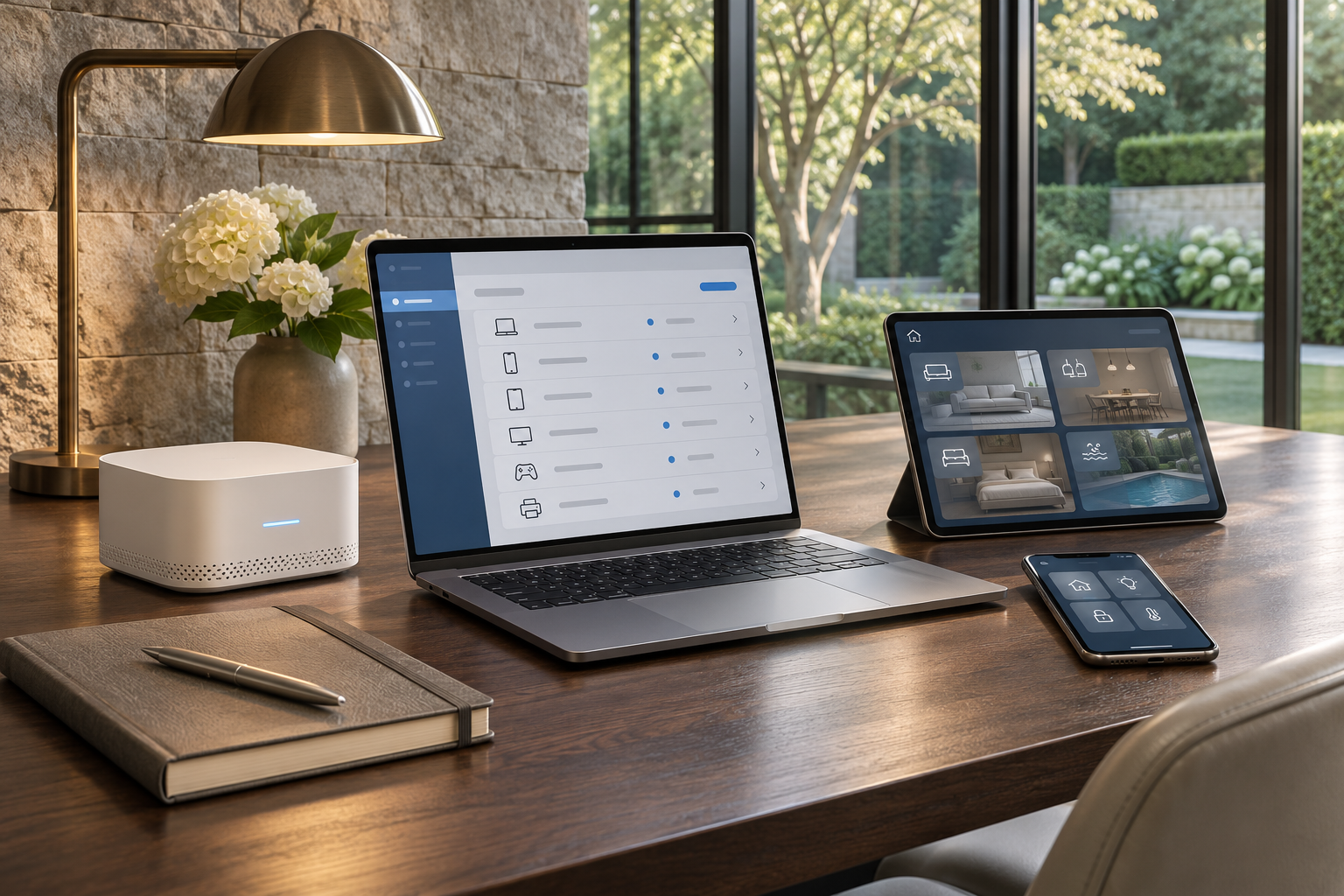
A room’s atmosphere is shaped by several systems at once. Lighting, daylight, shades, audio, and controls need to be considered together, with the architecture and interiors guiding where technology appears and how the household interacts with it.
Whole-home integration begins with the experiences you want in each space. Everyday scenes, familiar controls, and coordinated configuration make the design useful in practice. Commissioning checks those experiences, followed by a walkthrough with the people who will use them.

Moving between homes changes the local equipment and providers, but it need not fragment the household’s approach to technology. A multi-residence engagement documents the systems, access arrangements, and support requirements at each property.
Arrival and departure routines can inform the residential scenes and the service plan. The technical team coordinates relevant providers and keeps records of outstanding work, so the context of a property is available when a question or issue needs attention.
Systems, local providers, and site requirements.
Devices, preferences, routines, and service priorities.
Technical oversight, coordination, and continuity.
Equipment manuals, residential system guides, service records, and other approved documents can become a useful household knowledge collection. A private AI system makes this material easier to retrieve within a defined environment and access arrangement.
The service can also support recurring document work: extracting relevant information, organizing reference material, and preparing drafts for review. The information sources, permitted actions, and review points are part of the design, with ongoing maintenance as the collection and household needs evolve.
Find the lighting system guide for the living room.
Locate the relevant document, review the source, and prepare the next step in a defined workflow.
Choose the documents the household wants to use. Define who can access them. Build retrieval and useful document workflows around those decisions. Keep the sources, configuration, and operating guidance current through ongoing stewardship.
Your home. thoughtfully connected.
Tell us about your residence, the way your household lives, and what you would like technology to make possible.
Arrange a consultation